ServicesWhole-Home Filtration
Whole-Home Filtration in Missouri City
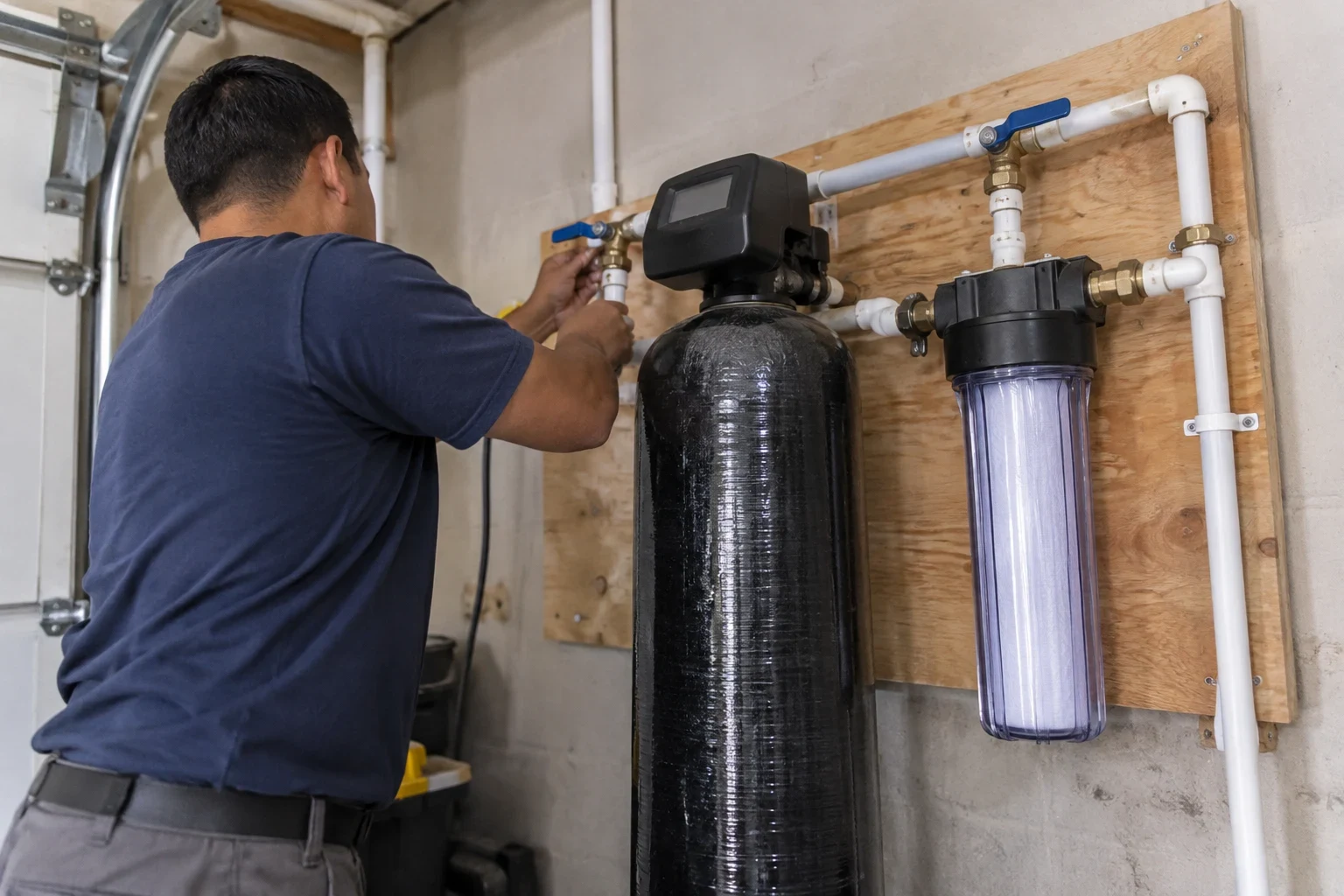
One system on your main water line treats the water at every tap, shower and appliance in your home. We test first, size the equipment to how your household uses water, and give you a clear schedule for upkeep so the costs never catch you off guard.
What a whole-home system does for your home
A whole-home filter, also called a point-of-entry system, is installed where the water line comes into your home. From there, every fixture receives filtered water: the kitchen, each bathroom, the laundry and the water heater. Most setups combine a sediment prefilter with a carbon media tank that reduces the chlorine or chloramine taste and odor left by city treatment.
This is the better choice when the problem follows you from room to room, in the shower and the laundry as much as the kitchen. If your main goal is cleaner water for drinking and cooking, our Reverse Osmosis page may suit you better, and many homes end up using both.
We hold the Certified Water Specialist designation from the Water Quality Association, and that training guides us to recommend only what your water results justify.
Inside every whole-home installation
- 01
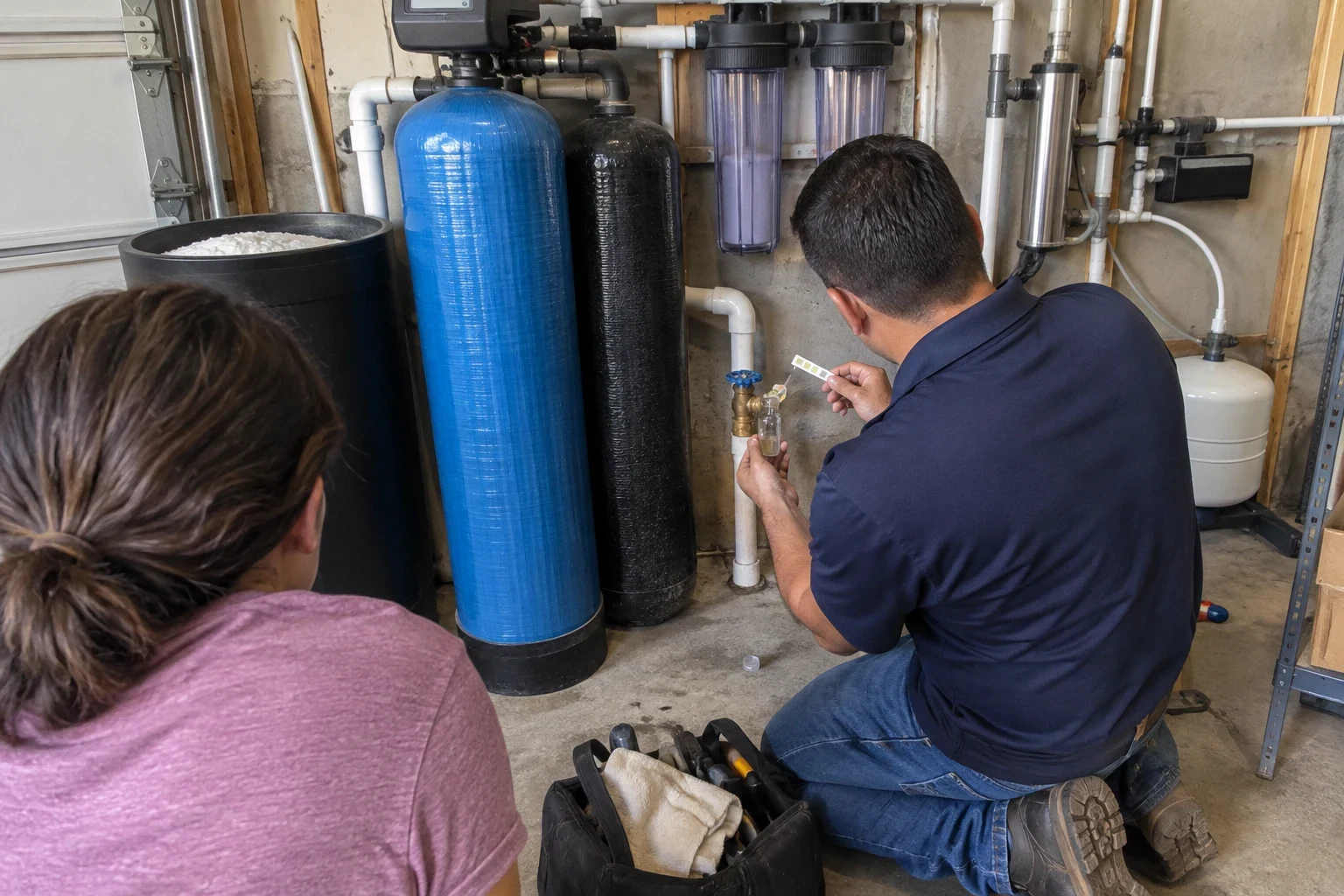
Your water results come first
Equipment recommendations start from what your water actually contains. If the first look raises bigger questions, our Water Testing service provides a fuller analysis.
- 02
Sizing to your household
Tank size follows your bathroom count and peak flow, so a morning of back-to-back showers with the dishwasher running still feels like normal pressure.
- 03
Sediment prefilter and carbon tank
The prefilter traps grit and loose scale so the carbon media works longer. Where chloramine is part of city treatment, we specify catalytic carbon, which handles it more effectively than standard media.
- 04
Bypass valve and careful plumbing
Each system gets a bypass so your home keeps running water during service. We match connections to your existing copper or PEX, keep the runs neat, and clean up the work area before we go.
- 05
Free installation
Installation is free, so your quote covers the equipment and media rather than labor on the day.
- 06
Full services after the sale
We remain your point of contact for media changes, prefilter swaps and any questions that come up later.
Questions about Whole-Home Filtration?
Call(281) 853-8856Signs your home could use whole-home filtration
A pool smell in the shower
Chlorine is most noticeable in hot, steamy water. If the bathroom smells like treated water, a drinking-water filter alone will not reach it.
Pitchers and fridge filters everywhere
When you are buying cartridges for several spots in the house, one central system is often simpler to maintain and easier to budget.
Grit in aerators and showerheads
Fine sediment collecting in faucet screens points to particles a prefilter can stop before they reach fixtures and appliances.
A remodel or new water heater on the calendar
Planning a bathroom update or replacing the water heater is a good moment to add filtration, since the plumbing is already being opened.
Taste that changes with the seasons
Utilities sometimes adjust treatment through the year. Hot summers often bring a stronger chemical taste, and carbon filtration smooths that out.
How a whole-home project runs
- 1
Start with a phone call
Describe what you have noticed at the tap and how many people use water in your home. We go over the likely options and give you your quote by phone once we have enough detail to make it accurate.
- 2
Water check and site review
We look at your water and locate where the main line enters, often in the garage or on an exterior wall. That shows how much plumbing the installation will involve.
- 3
Installation day
We shut off the water briefly, set the tanks on a level pad, plumb in the bypass and connections, and protect floors as we work. Most homes have running water again the same afternoon.
- 4
Startup and walkthrough
We flush the new media, check for leaks and pressure, then show you how the bypass works and hand you a written schedule for prefilter and media changes.
What shapes the cost
Because installation is free, most of your quote comes down to the equipment you choose and how much media it holds. We break the estimate into lines and include the ongoing upkeep, so you can plan for it years ahead rather than discover it later.
- Size of the system
- More bathrooms and higher peak flow call for a larger tank and more media.
- Type of carbon media
- Catalytic carbon costs more than standard carbon but is the better choice where chloramine is used.
- Location and access
- A main line that is easy to reach keeps things simple. Tight spaces or lines that need rerouting add materials.
- Prefilters and add-ons
- A sediment stage is standard. Pairing with a softener or a drinking-water system changes the overall plan.
- Long-term upkeep
- Prefilter cartridges and eventual media replacement are part of owning the system, and we price them up front.
Common questions about whole-home systems
Does a carbon system take care of hard water too?
It does not. Carbon media targets chlorine taste, odor and sediment, while hardness comes from calcium and magnesium that pass straight through it. When a test shows hardness worth treating, a softener can be installed next to the filter, and our Water Softeners page explains how the two work together.
Will it lower my water pressure?
Equipment sized correctly for your home should not cause a drop you can feel. Pressure problems usually trace back to a tank that is undersized for the household or a prefilter that stayed in past its change date. We size for your heaviest hour of use and keep you on a replacement schedule so neither happens.
How often does the media need replacing?
It varies with how much water your household uses and what that water carries. After we have looked at your water, we write out when the prefilter and the carbon will likely need changing, so each expense is one you can set aside for in advance.
Do I still need a drinking-water system?
Many homes are happy with whole-home filtration alone. If you would like an extra stage of treatment for the water you drink and cook with, a reverse osmosis unit under the kitchen sink adds it without making the main system any larger.
Where does the equipment go?
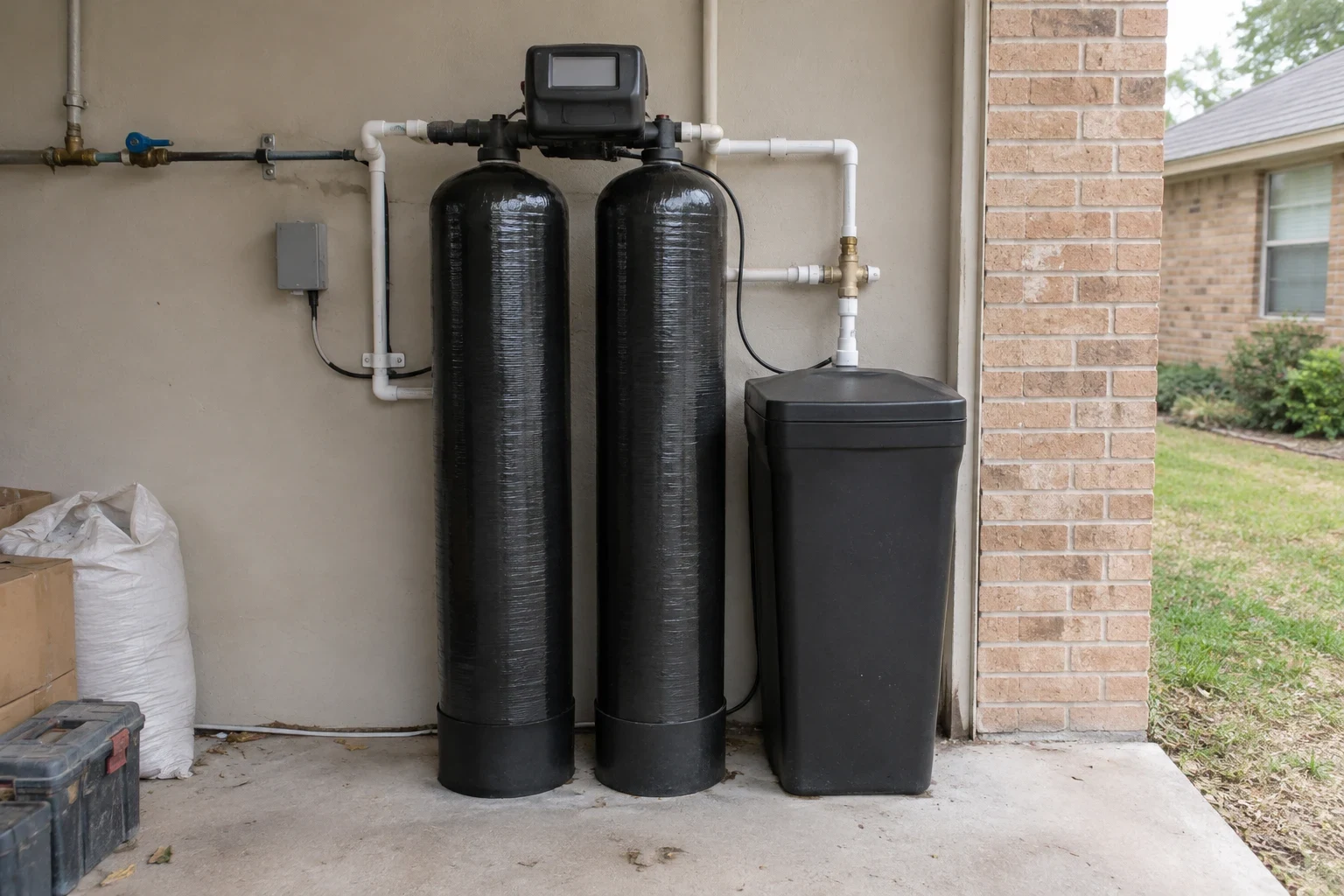
Usually close to where the main line comes into your home, and in many houses that is the garage. We settle the exact spot with you before installation day, so placement is decided long before the tanks arrive.
Plan your filtration on your own schedule
Tell us what you notice at the tap and where the main line enters your home. We will walk through sizing, carbon media options and the cost of upkeep, so you can choose a timing that fits your budget well before anything feels pressing.