ServicesWell Water Treatment
Well Water Treatment in Missouri City
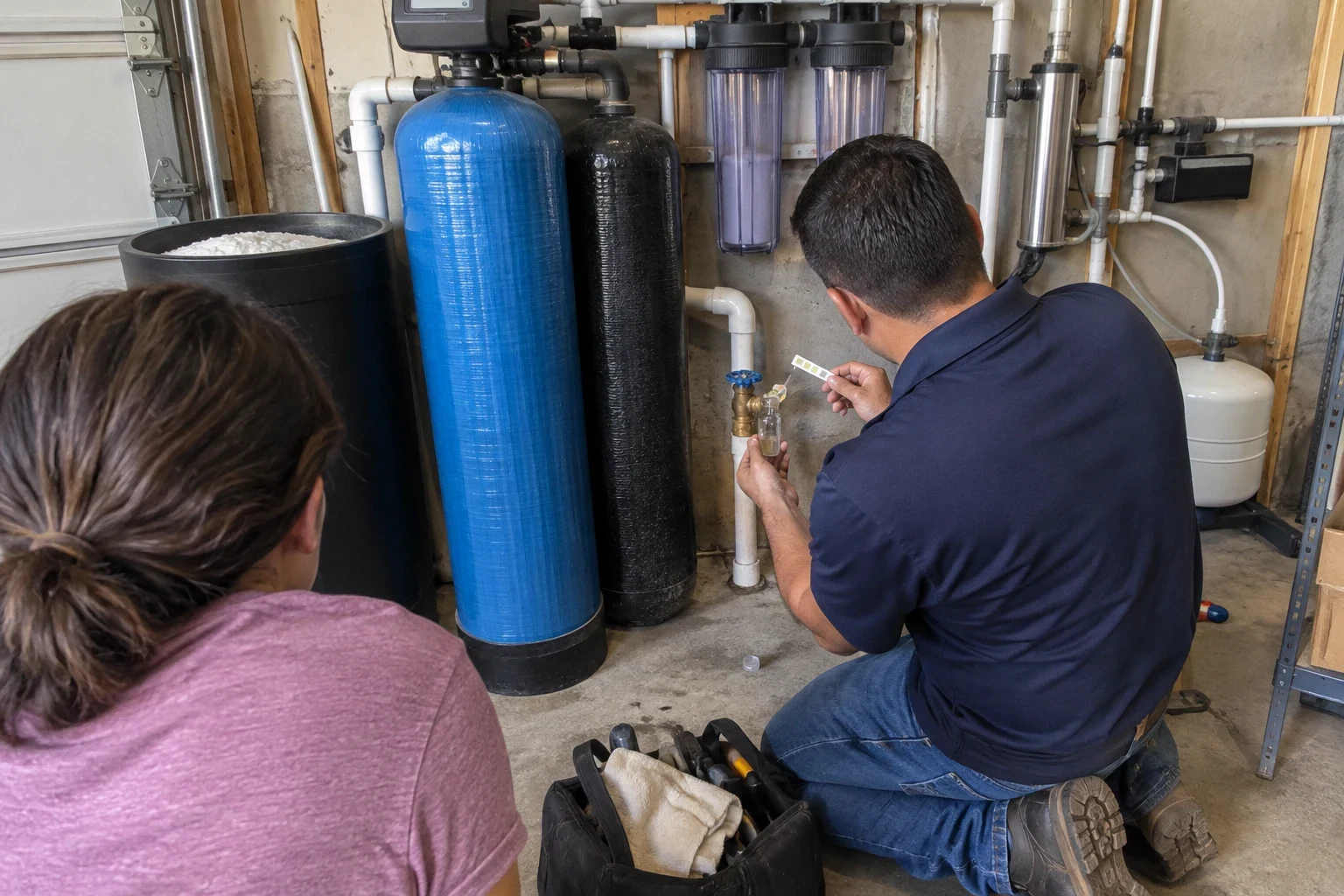
A private well gives you independence, and it also makes you the one responsible for what comes out of the tap. We test your water, explain the results in plain terms and build a treatment plan you can schedule and budget for before small problems grow.
Treatment matched to what your well actually holds
Well water is never the same from one property to the next. Depth, the formation it draws from, the age of the casing and even recent heavy rain all change what reaches your home. That is why we never start with equipment. We start with a test, then choose only the stages your water needs.
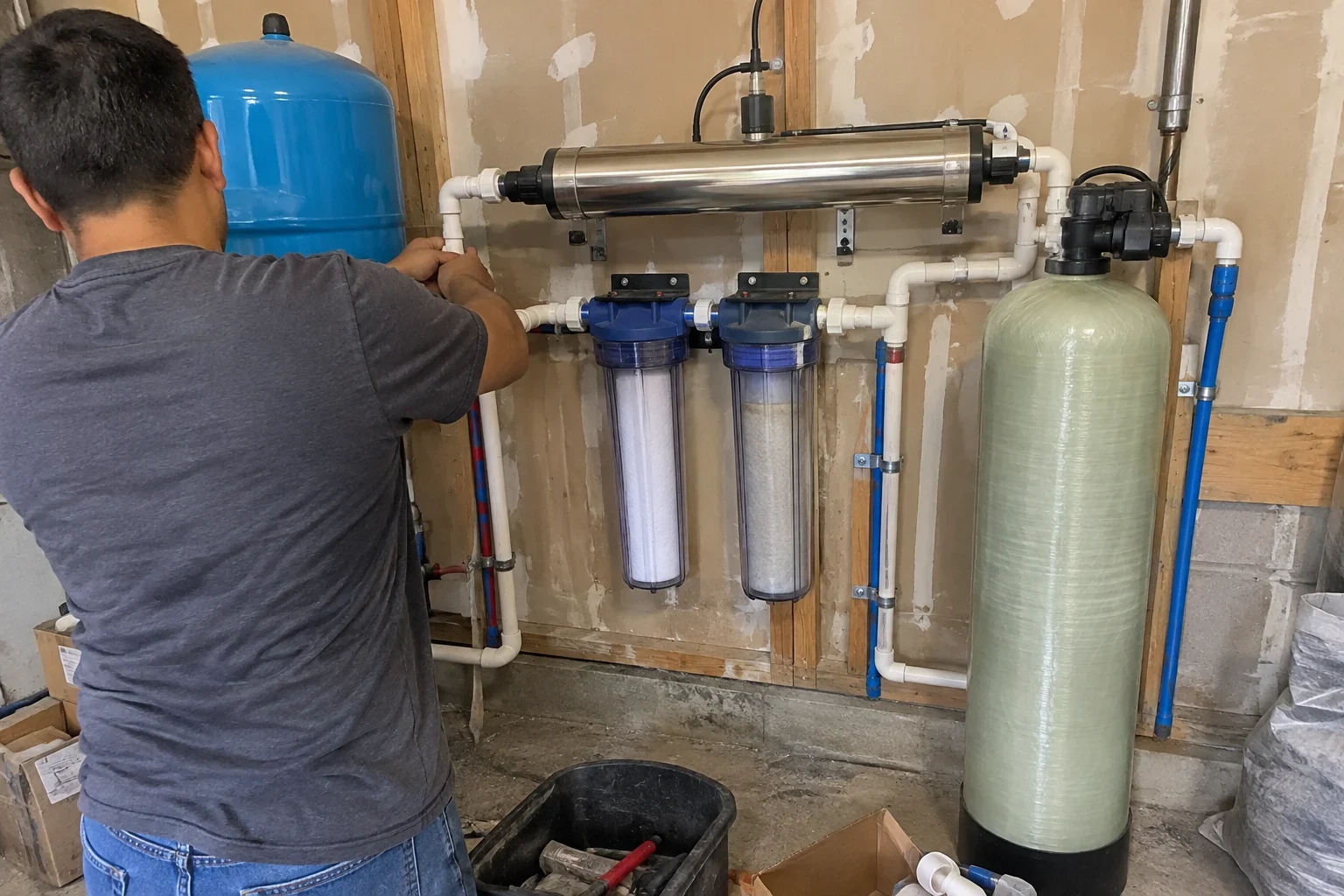
Typical issues include dissolved iron that leaves orange stains, hydrogen sulfide that smells like rotten eggs, fine sand and silt, hardness and, now and then, bacteria. Each has its own fix, and one filter does not solve them all. A well-planned system puts them in the right order so each stage protects the next.
Our team includes a Certified Water Specialist through the Water Quality Association, so the system on your wall is sized from your results and your flow rate, not from a catalog page.
The stages we build a well system from
Sediment prefiltration
Sand and grit get stopped first, by a spin-down screen or a cartridge housing. That first stage keeps valves, fixtures and the rest of the system from wearing early.
Iron and manganese removal
An oxidizing filter, often with air injection, changes dissolved iron into solid particles, traps them and rinses them out during backwash. That is how rust rings in toilets and orange-tinted laundry go away.
Sulfur odor control
We treat hydrogen sulfide with oxidation and filtration, or with catalytic carbon when the levels are modest. The aim is water with no smell at all.
UV disinfection
When a test turns up coliform bacteria, an ultraviolet chamber treats the water as it flows through. Nothing is added, and the lamp is replaced once a year.
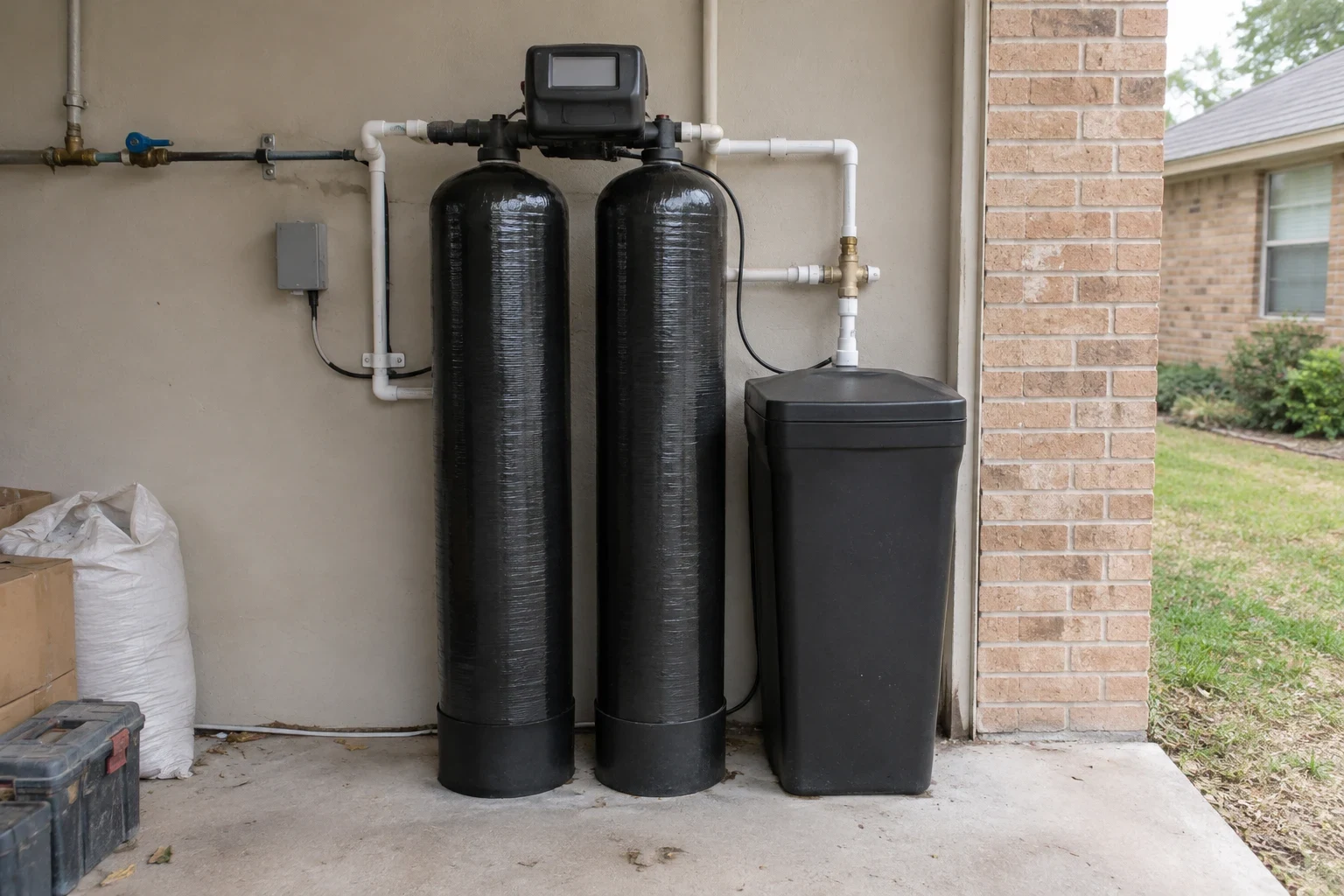
Softening when the numbers support it
If hardness comes back high, a softener can sit after the iron stage. Our Water Softeners page goes into the details.
Drinking water polish
Some households add an under-sink unit just for cooking and drinking. The Reverse Osmosis page covers how it works alongside a well system.
Signs your well water needs treatment
- Rotten egg smell
- Usually hydrogen sulfide. It is often stronger on the hot side, where the water heater's anode rod can react with sulfur-reducing bacteria.
- Orange or brown stains
- Iron leaves rust marks on sinks, tubs, driveways and anywhere irrigation water lands. Black specks point to manganese.
- Grit in aerators
- If faucet screens clog with sand, your pump is pulling sediment that will wear down valves and appliances over time.
- Metallic taste
- Coffee and tea that taste off, or ice cubes that look cloudy, often trace back to iron or other dissolved minerals.
- No test in the last year
- Bacteria and nitrates have no taste or smell. A yearly check, or one after flooding or well repairs, is the only way to know.
How a well treatment job runs
- 1
Test and talk
We collect samples and review the results with you, including flow rate and pressure tank setup. Our Water Testing page explains what we look for.
- 2
Written plan
You get a clear plan listing each stage, why it is there and what upkeep it needs. If budget matters, we show which stage to install first and which can wait.
- 3
Installation day
Most systems go in near the pressure tank in a few hours. We lay down protection, shut off the supply only as long as needed, set backwash cycles and flush the lines. Installation itself is free.
- 4
Check-in and upkeep
We retest after the system settles in to confirm it is doing its job. With full services after the sale, filter changes and lamp replacements stay on a schedule you can plan around.
What moves the price of a well system
Neighboring wells often draw very different water, so your lab results set the budget, not a standard package. Installation is free, which leaves the equipment and its long-term upkeep as the main costs. We list each piece separately so you can see where the money goes and spread the spending out if that suits you.
- What the test finds
- A well with only sand or silt may need a single stage. Iron, sulfur and bacteria together can call for three or four.
- Flow rate and demand
- Backwashing filters have to match your pump's output and the busiest hour in your home. Too small and the system struggles to keep up; too large and you pay for capacity you never use.
- Space and connections
- How much room sits beside the pressure tank, where backwash water can drain and whether an outlet is close for UV or control valves all shape the layout.
- Ongoing upkeep
- Cartridges, filter media and UV lamps each wear out on their own timeline. We put those costs in the plan so you see the yearly total, not only the first day.
Well water treatment questions
- Do I need to test before you recommend anything?
- Yes. Without a test we would only be guessing, and guessing usually means buying the wrong stage. A lab result tells us which contaminants are present and at what levels, so the system fits your well.
- Can I install the system in stages?
- Often, yes. We usually start with whatever affects health or damages plumbing, such as bacteria or heavy iron, and leave comfort upgrades for later. The plan is laid out so later stages connect without redoing earlier work.
- Will treatment lower my water pressure?
- A properly sized system should cause very little drop. Pressure problems usually come from undersized filters or clogged cartridges, which is why we match equipment to your measured flow.
- How often should my well be retested?
- Once a year is a sensible habit, and again after flooding, a pump replacement or any change in taste or smell. Retesting also confirms your treatment is still keeping up.
- Does the sulfur smell mean my water is unsafe?
- Hydrogen sulfide is mostly a nuisance at typical levels, but it can corrode plumbing and sometimes travels with bacteria. A test sorts out which you are dealing with before we treat it.
Get ahead of your well water
Describe the smell, stain or taste that has you wondering, and we will walk through testing, a staged plan and the upkeep that comes with it. Sorting it out now costs far less than replacing a stained fixture or a worn-out water heater later.