What Cannot Be Filtered Out of Water in Missouri City Homes?
Every filter has limits, and knowing them before you buy keeps you from paying for a system that misses the thing you care about.
What cannot be filtered out of water?
No single filter removes everything. Hardness minerals, dissolved gases, nitrates, some small chemical compounds and anything that is chemically water itself pass through ordinary filters. Bacteria and viruses need disinfection, not only filtration. Most of these can still be handled with the right combination of equipment once a test shows what is actually in your water.
Why does a filter let some things through?
A filter works in one of a few ways. It strains particles out by size, it holds chemicals on a surface like activated carbon, or it pushes water through a membrane so tight that most dissolved material stays behind. Each method is very good at certain things and poor at others.
Sediment cartridges catch sand, rust flakes and grit, but anything dissolved passes straight through. Carbon grabs chlorine, many odors and a long list of organic chemicals, yet it does almost nothing to dissolved minerals or salts. Reverse osmosis removes the widest range, but even a well-kept membrane reduces most substances rather than eliminating every trace of them.
So the useful question is not whether a filter is good. It is whether the filter matches what is in your water.
What ordinary filters miss
These are the substances that most often surprise homeowners after they install a pitcher, a faucet filter or a basic carbon system.
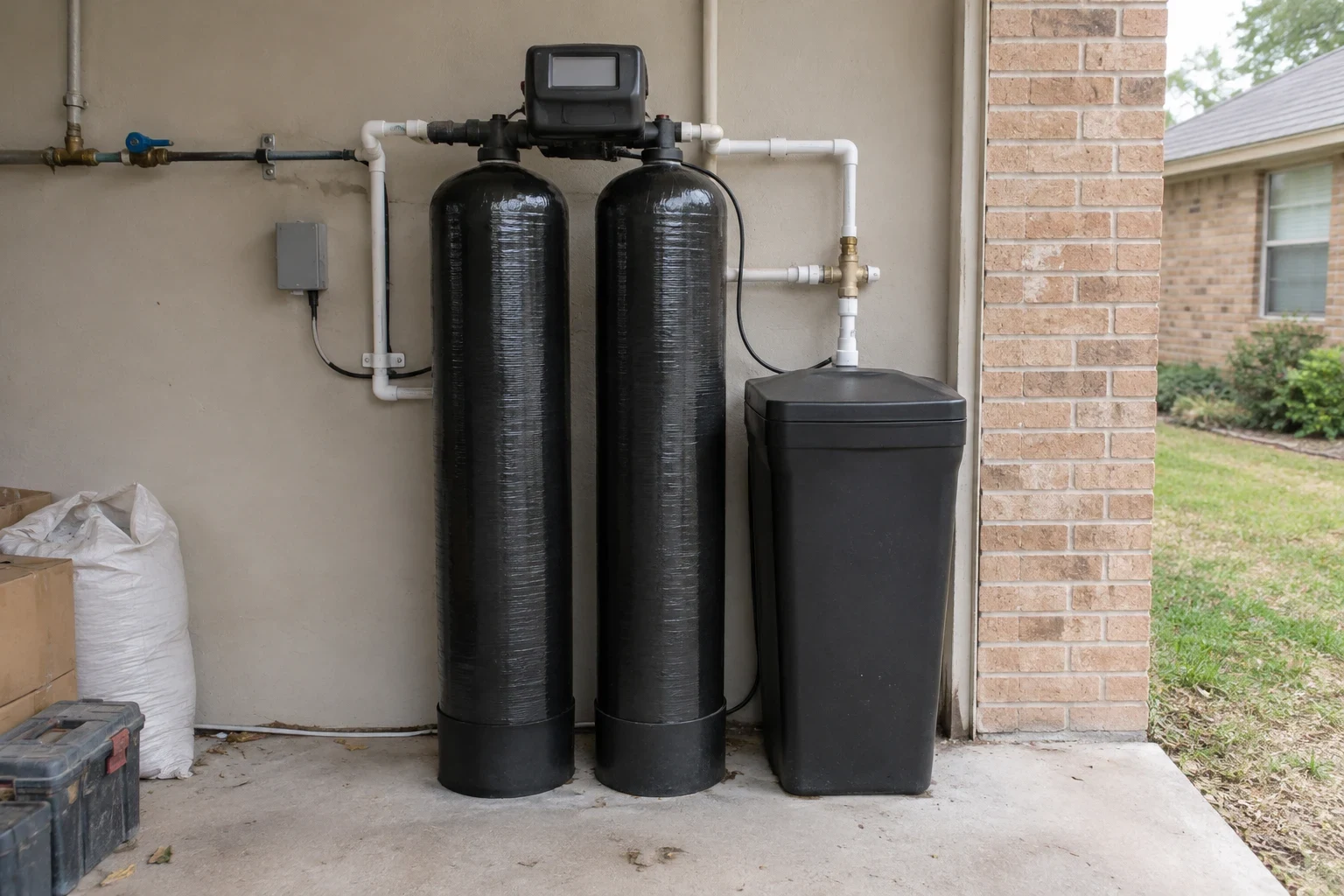
- Hardness minerals. Calcium and magnesium are dissolved, so carbon and sediment filters leave them alone. Scale on fixtures and a water heater usually calls for a water softener, which swaps those minerals out through ion exchange.
- Nitrates and some dissolved salts. Carbon does not reduce nitrates in a meaningful way. Reverse osmosis or a dedicated ion exchange system does.
- Dissolved gases. Gases such as hydrogen sulfide, the rotten-egg smell some private wells have, slip through membranes and need oxidation or aeration to treat properly.
- Very small organic compounds. Some byproducts of disinfection are small enough to pass partly through a reverse osmosis membrane, which is why good systems pair the membrane with carbon stages.
- Anything that is water itself. Tritium and heavy water are chemically the same as ordinary water, so no household filter can separate them. These are not a practical concern for city water, but they show the limit clearly.
Germs, chloramine and other special cases
Bacteria and viruses are a different problem. Most household carbon filters are not built to make water microbiologically safe, and a damp cartridge left in place too long can actually grow bacteria. Treated city water arrives already disinfected. Homes on private wells are where disinfection, often with ultraviolet light, earns its place as part of well water treatment.
Disinfectant matters too. Many utilities use chloramine instead of plain chlorine because it lasts longer in the pipes. Standard carbon handles chlorine taste well but works slowly on chloramine, so a whole-home filtration system meant for chloramine needs catalytic carbon and more contact time. Your utility's annual water quality report says which one it uses, and it is worth checking before you choose media.
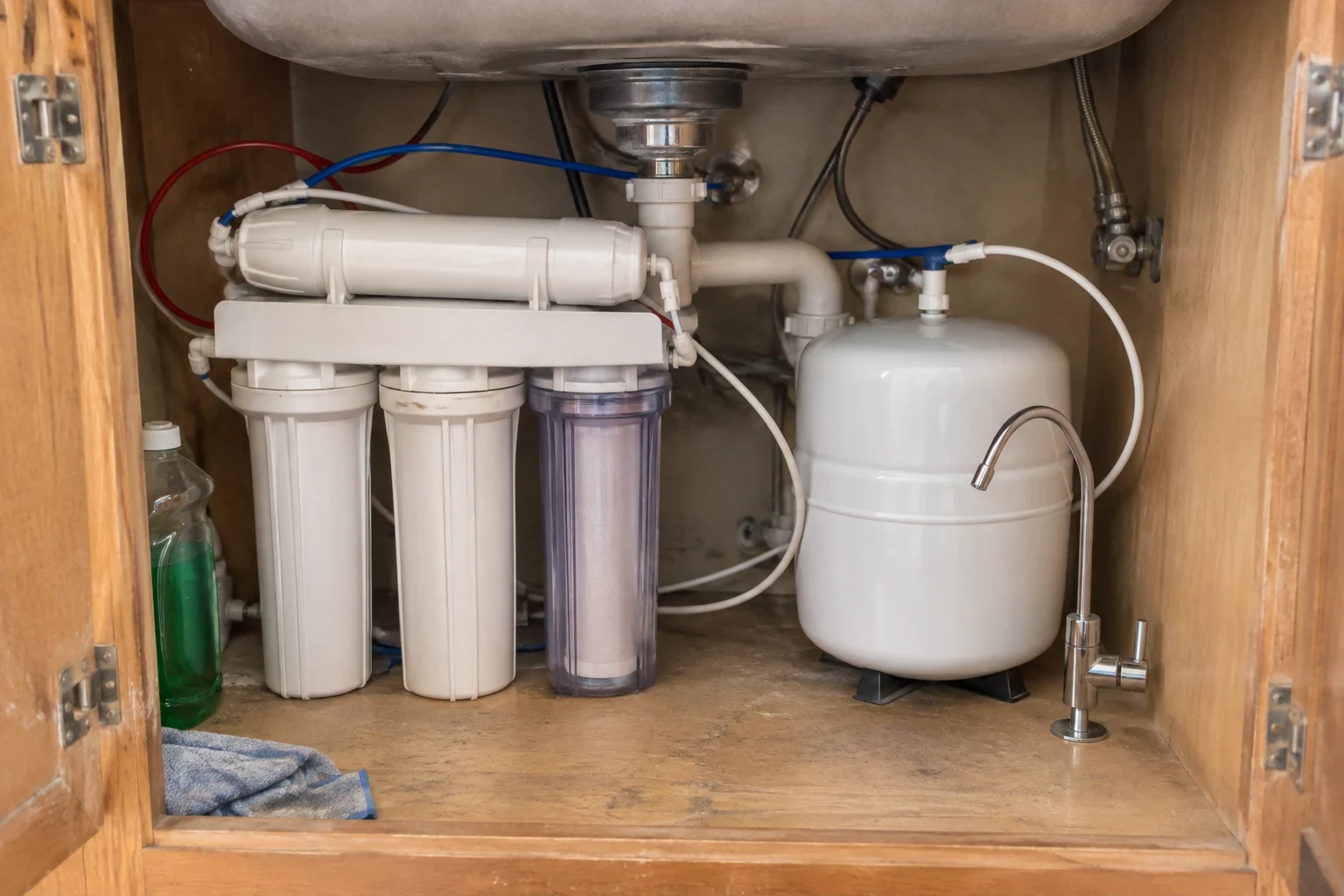
Finally, a filter cannot fix what happens after it. A whole-home system at the main line will not catch lead picked up from an older faucet or a brass fitting downstream. For drinking and cooking water, an under-sink reverse osmosis unit at the tap covers that last stretch of pipe.
How to plan treatment that covers the gaps
The calm way to handle all of this is to test first and buy second. A water test tells you hardness, iron, pH, total dissolved solids and any contaminants of concern, so each piece of equipment has a clear job. It also tells you what you do not need, which is just as valuable when you are setting a budget.
From there, most homes land on one or two layers. A whole-home carbon system improves taste and smell at every tap and in the shower. A softener goes in only when the hardness numbers support it. A reverse osmosis unit at the kitchen sink handles the dissolved material carbon leaves behind. Some families add an alkaline water system after reverse osmosis to put minerals back and soften the flat taste that very pure water can have.
Planning ahead also means planning upkeep. Cartridges, carbon and membranes all wear out, and a filter past its life is the most common reason a system stops doing its job. In Missouri City, where summer heat keeps water use high, we set replacement intervals based on your actual household use rather than a generic calendar.
- Start with a test so you know what you are treating.
- Match each system to a specific result on that test.
- Put drinking-water treatment at the tap, closest to the glass.
- Schedule filter and membrane changes before performance drops.
More questions about filter limits
- Does boiling water remove what filters miss?
- Boiling kills germs, but it concentrates minerals, nitrates and lead as water evaporates. It is a short-term fix for bacteria, not a substitute for filtration.
- Can one system handle everything?
- Rarely. Most homes get the best result from a whole-home filter for general water quality plus reverse osmosis for drinking water, with a softener only if hardness calls for it.
- Will a filter remove fluoride?
- Carbon removes very little fluoride. Reverse osmosis reduces most of it, so an under-sink unit is the usual choice for homeowners who want less.
- How do I know my filter is still working?
- Taste and smell changes are a late sign. A periodic test of total dissolved solids at the tap, and changing cartridges on schedule, gives a much earlier and clearer answer.
Find out what your water actually needs
On a call we talk through what you are noticing at the tap, what a test would show, and which system, if any, fits your home. Installation is free, and we offer full services after the sale, so filter changes are planned from day one.